
The development of U.S. industry is a story of rapid progress, deep crises, and massive innovation. Over two centuries, the United States has transformed from a country of small manufactories into a global industrial center, and today it is confidently moving into the era of Industry 4.0, actively implementing digital technologies into production. How did this grand transformation happen?
The Emergence of Manufactories and Early Factories: The Industrial Revolution
The early 19th century was a time when the agricultural society of the U.S. gradually gave way to an industrial one. The first industrial revolution, inspired by British examples, brought manufactories — enterprises where products were made by hand but in an organized scale.
The textile industry played a key role in industrial development. A prime example is Francis Lowell’s factory in Massachusetts, founded in 1814. It combined all stages of textile production under one roof, which became a real technological breakthrough for the American market. During this period, canals, railroads, and telegraph lines were actively built, promoting the development of the domestic market.
The Era of Mass Production and Industrialization
The second half of the 19th century was marked by accelerated industrialization. The invention of electricity, the development of mechanical engineering, and the use of steam engines gave U.S. industry an unprecedented boost. It was during this time that famous figures such as Andrew Carnegie in the steel industry and John Rockefeller in the oil sector emerged.
One of the most important innovations was the introduction of assembly line production, first used by the Ford Motor Company in 1913. Henry Ford managed to reduce car assembly time from 12 hours to 2.5 hours, making cars affordable to the masses. This event not only changed the U.S. economy but also laid the foundation for the mass consumption model that still dominates today.
The Great Depression and New Industrial Policy
The stock market crash of 1929 and the Great Depression were major challenges for American industry. Thousands of factories closed, and unemployment soared to a record 25%. To overcome the crisis, President Franklin Roosevelt’s government launched the New Deal program, which included supporting industrial enterprises, creating jobs, and investing in infrastructure.
Special attention was given to technological innovations: state projects in energy, transportation, and construction became catalysts for the modernization of the country’s industrial capacities. It was during this period that active electrification, the construction of large factories, and the introduction of new production management methods began.
Post-War Industrial Boom and Technological Revolution
After World War II, U.S. industry experienced an unprecedented growth period. New automobile plants were built, and the aviation and space industries developed. The era of high technology began: in 1947, the first transistor was created, laying the foundation for modern electronics.
The 1950s–1970s became the golden age of American industry. However, by the end of the 20th century, the U.S. faced new challenges: increasing competition from Japan and Europe, deindustrialization of traditional industrial regions (the “Rust Belt”), and a shift toward a service economy.
In response to these changes, American industry began to actively invest in automation, robotics, and computer technologies. This became the prelude to the next industrial revolution.
Industry 4.0: A New Era of American Manufacturing
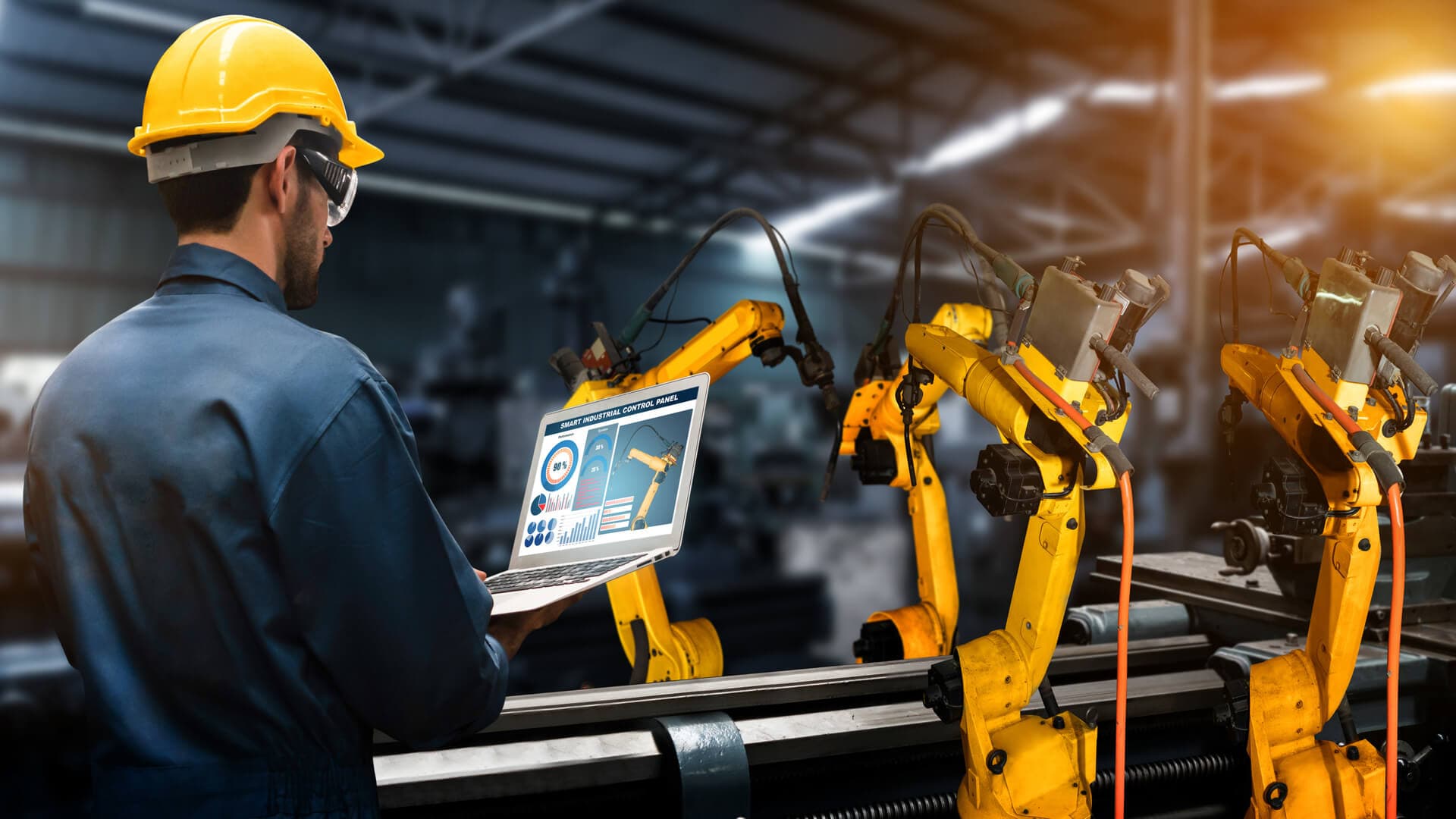
Today, the U.S. is at the forefront of Industry 4.0 — the fourth industrial revolution based on digitalization, big data, the Internet of Things (IoT), artificial intelligence, and the automation of production processes.
Smart factories, where equipment diagnoses malfunctions and offers solutions independently, are no longer science fiction but reality. 3D printing allows parts to be created on-site, reducing logistics costs. Artificial intelligence helps optimize supply chains, and augmented reality technologies simplify employee training and equipment repairs.
American companies like General Electric, Boeing, and Tesla are actively implementing Industry 4.0 solutions, allowing them to remain competitive in the global economy. Government programs also support industrial transformation by encouraging new technology development and promoting STEM education.
Conclusion: A Look into the Future
The U.S. industry has traveled an impressive journey from small manufactories to the digital factories of the future. Every stage of development was accompanied not only by technological achievements but also by social changes requiring adaptation from society and the economy.
Today, the United States faces new challenges: global competition, environmental requirements, cybersecurity. However, the experience of the past two centuries shows that innovation and flexibility remain the driving forces of American industry.
In the era of Industry 4.0, the U.S. once again strives to be not just a leader in manufacturing but an example of how technology can change the future of work, the economy, and everyday life.